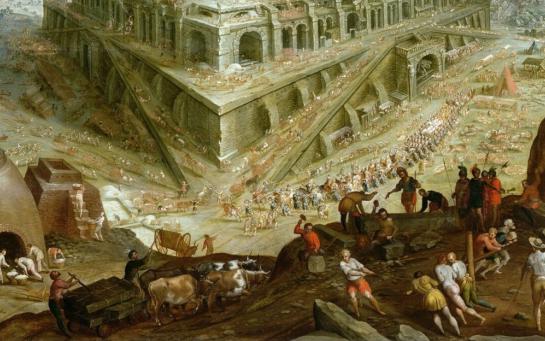
On June 6th, 2026, VISU-director Pieter Martens will present a lecture called "A Building Site in Reverse: the destruction of Thérouanne in 1553" at the Architecture in Rising: Building Sites of Europe, c. 1400-1700 conference in Cambridge, United Kingdom.
For more information, have a look on the conference website.
A Building Site in Reverse: the destruction of Thérouanne in 1553
Immediately after its conquest by Emperor Charles V’s army on 20 June 1553, the French town of Thérouanne was completely destroyed. Within the space of only two months, the whole town – including its impressive fortifications, gates, castle, main buildings, houses and even its renowned gothic cathedral – was methodically dismantled by an especially recruited regiment of four thousand labourers, until ‘no stone was left standing’. This 28 extraordinary episode can be regarded as a building site in reverse. The abundantly available archival sources illuminate not only the rationale of the Emperor’s unprecedented, dramatic decision to wipe the place off the map, but also reveal how the demolition works were carried out. First-hand documents (letters of correspondence, reports, accounts, drawings), complemented by later archaeological research, reveal the workings of this remarkable ‘deconstruction site’: they inform us about the different actors involved, the interventions of the imperial engineer and of local master masons, the problematic recruitment of sufficient numbers of labourers, the quantities and variety of tools at their disposal, the demolition techniques employed (including the innovative use of explosive gunpowder mines), the speed and thoroughness with which the works were executed, the removal and reuse of the dismantled building materials, the attempted transfer of the cathedral’s main portal and its 13th-century sculptural decoration to nearby Saint-Omer for reuse in the collegiate church there, and the manufacture of a commemorative wooden model of the vanished town, which recalled the destructions of Troy and Carthage. Besides presenting this exceptional case of total destruction, I will argue more generally that in wartorn early modern Europe, where sieges and partial destructions of castles, fortresses and towns were ubiquitous, the planned dismantlement of buildings occurred so frequently that such sites of demolition – though mostly ignored by architectural historians – were a significant counterpart to the more prestigious building sites.